Unveiling a 19th-Century French Tonnage Certificate
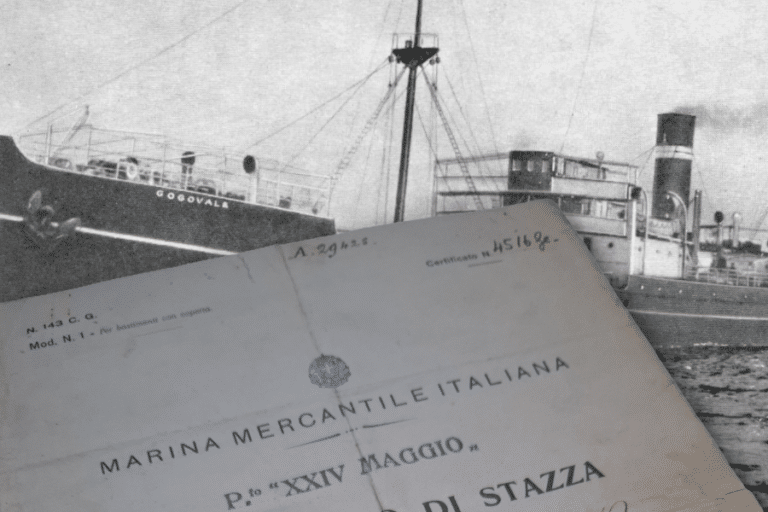
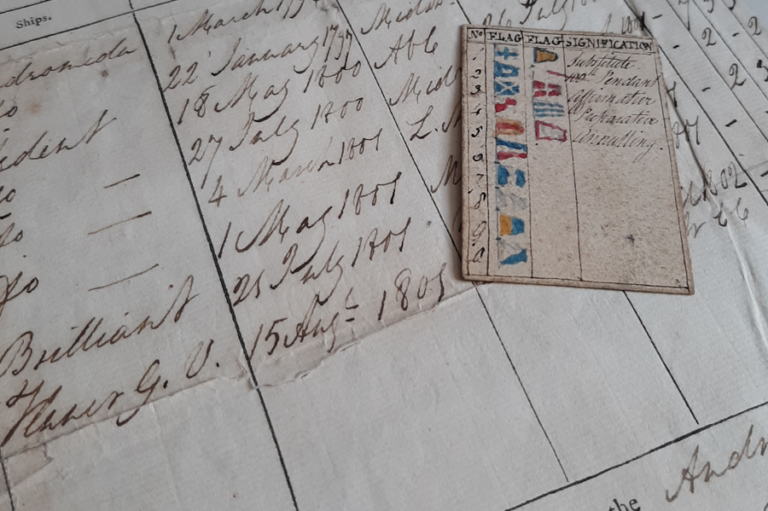
As a matter of habit, I am always on the lookout for historical documents related to vessels. When I consult the catalogue of an auction house or a specialised antiquarian dealer, I simply cannot hold myself back from searching for maritime-related documents, whether they are printed or in manuscript form. It is a second nature of sorts.
Most of the documents I have managed to collect up to now date back to the first half of the 20th century, with a few exceptions like a mysterious 19th-century Certificate of Registry and an 18th-century mariner’s certificate. I was therefore thrilled when I came across this 19th-century French Tonnage Certificate, dated 20 September 1893.
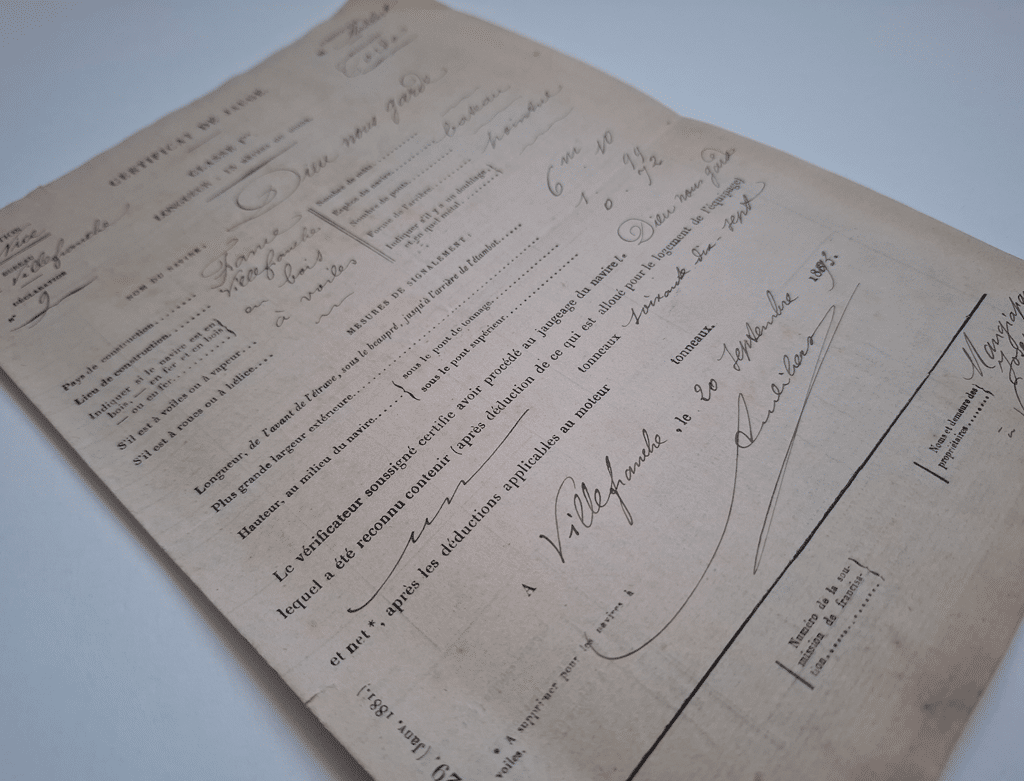
Apart from a small corner missing, the certificate is in remarkable condition. As you may expect from 19th-century paper, it is slightly discoloured. However, the ink is still wonderfully crisp, which indicates that it has been archived for a considerable time. If it had been exposed to daylight, the ink would have faded. The document, measuring 34.4 x 25.7 cm, folds in half and reveals a wealth of information about a vessel.
The Vessel: “Dieu nous garde”
The vessel named on the certificate is “Dieu nous garde,” which translates to “God is watching over us” or “God keep us safe.” This name, strongly suggests the vessel was a fishing boat. Fishermen, facing the unpredictable and often perilous nature of the sea, frequently named their boats in a way that invoked divine protection.
The certificate provides a detailed physical description of this vessel. It was constructed in Villefranche, France, and built entirely of wood. A key detail is its “pointed” stern, a characteristic shape for many traditional boats in the Mediterranean. It is classified as a sailing vessel, although strangely enough, the certificate does not specify the number of masts.
The principal dimensions listed are a length of 6.10 metres and a breadth of 1.99 metres, with a depth of 0.72 metres. These measurements confirm that Dieu nous garde was a very small craft, reinforcing the likelihood that it was used for local fishing or coastal activities rather than long-distance trade. The owner is listed as Joseph Mangiapan, a resident of Villefranche. For a boat of this size, it is highly probable that the owner was also the operator, a local fisherman earning his livelihood from the sea. Unless he was the Aristotle Onassis of Villefranche and had a whole fleet smaller vessels 😉

Click to view a detailed image
Decoding the Tonnage Certificate
A tonnage certificate is a document that certifies the cargo-carrying capacity of a vessel. This measurement, known as tonnage, is crucial for calculating port duties, registration fees, and other charges. What makes this particular certificate interesting is the intricate detail of the calculations.
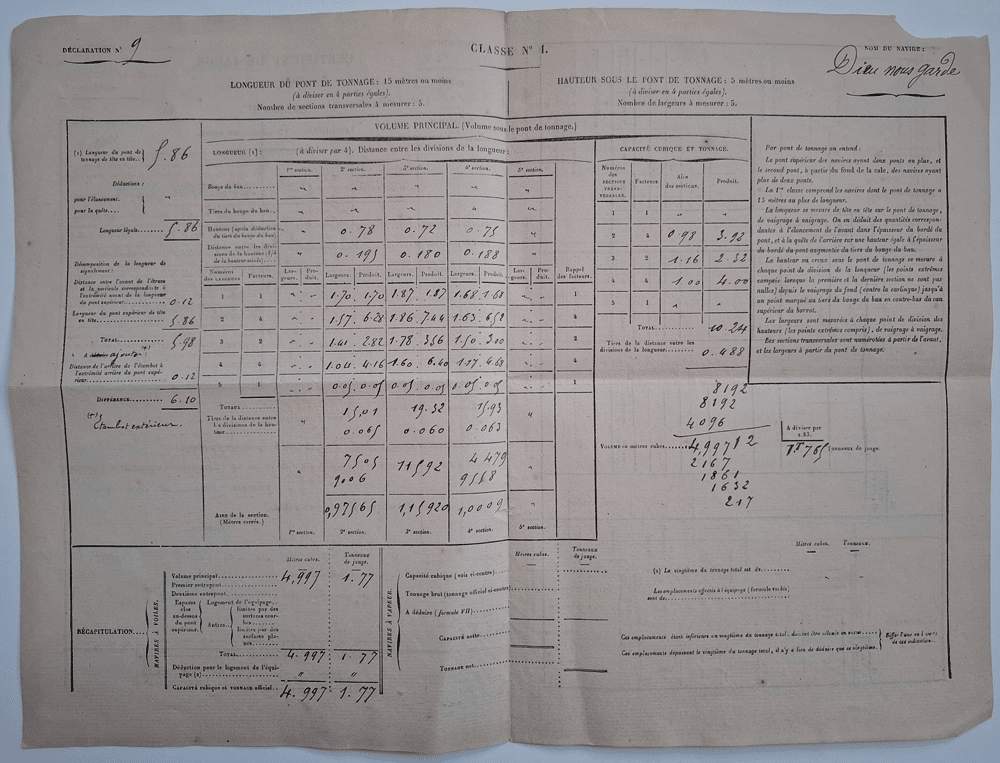
The document is a pre-printed form, with specific values for Dieu nous garde filled in by an inspector named Mr. Audibert. The certificate is designated as “IST CLASS,” which applies to vessels with a tonnage deck length of 15 metres or less. The final calculated tonnage for Dieu nous garde is a modest 1.77 tons.
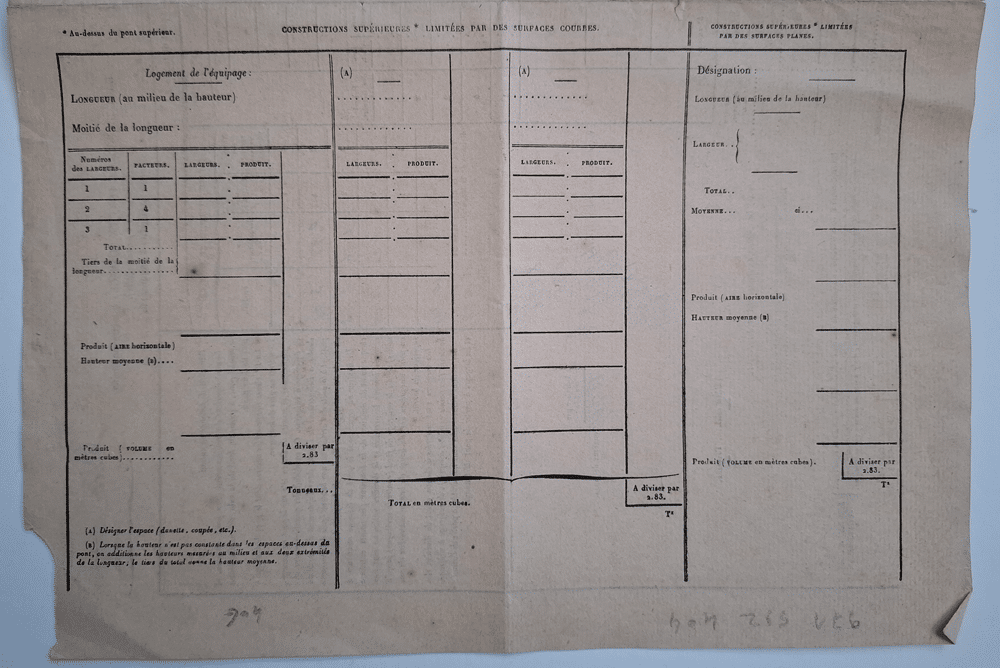
To arrive at this figure, the certificate is filled with a series of complex calculations based on the vessel’s dimensions. The process involved dividing the hull into multiple transverse sections and measuring the breadth at various heights for each section. These measurements were then used in a formula, likely a variation of Simpson’s Rule, to calculate the volume of the hull in cubic metres. This volume was then converted into tons, with one register ton being equivalent to 2.83 cubic metres (or 100 cubic feet).
The form includes columns for “Factors,” “Breadths,” and “Products,” all part of the mathematical process to determine the area of each transverse section. The sum of these products, multiplied by the distance between the sections, provides the total volume. The certificate even accounts for deductions for the overhang of the bow and the rake of the stern. It is a beautiful example of the precision required in naval architecture, long before the age of computers and digital calculators.
Click to view a detailed image
The Search for “Dieu nous garde”
Having obtained such a document, my curiosity was naturally tickled. I wanted to find out more about this little vessel and its owner. My search began with online databases and archival records, hoping to locate an official registration entry for Dieu nous garde.
I focused my search on the archives of the Alpes-Maritimes department, where Villefranche-sur-Mer is located. I also checked the records of the Service Historique de la Défense (SHD), which holds many historical maritime documents. My hope was to find a “Registre des petits bateaux” (Register of Small Boats) from around 1893 that would list the vessel.
Unfortunately, my online searches did not result in a match. While the Archives départementales des Alpes-Maritimes have an extensive online catalogue, many local registers, especially for small fishing boats, have not yet been digitised or indexed by name.
Click to view a detailed image
Final Thoughts
This 19th-century French tonnage certificate is more than just an old piece of paper; it is a direct link to the maritime practices of over 130 years ago. It offers a fascinating insight into the meticulous methods used to determine a vessel’s tonnage in that era. The document details the precise mathematical calculations that underpin the final tonnage declaration, a level of transparency that is largely absent from modern tonnage certificates.
Today, tonnage certificates are typically issued by Recognised Organisations on behalf of flag states. These modern documents declare the final gross and net tonnage figures but do not include the underlying calculations. The 1893 certificate for Dieu nous garde, however, lays bare the entire process, showcasing the craftsmanship and mathematical precision required from both shipbuilders and administrators of the time. It serves as a testament to a bygone era of maritime administration, where the workings behind the final figures were an integral part of the official record. For researchers and historians, this makes the document not just a record of a vessel, but a window into the historical procedures of naval architecture and regulation.