
The New Netherlands’ Flag Register Explained
The Netherlands is introducing a new, streamlined process for registering sea-going vessels under the Dutch flag. With the upcoming implementation of the Kingdom Act on the Nationality of Seagoing Vessels (Rijkswet nationaliteit zeeschepen, or RNZ), effective from 1 July 2025, significant changes are being made to maritime regulations. These changes aim to simplify vessel registration, strengthen compliance measures, and enhance governance.
Here, we break down how the RNZ works and introduce the brand-new Netherlands’ Flag Register (Nederlands Vlagregister), which promises to modernise and refine maritime registration in the nation.
What is the Kingdom Act on the Nationality of Seagoing Vessels (RNZ)?
The RNZ replaces outdated and fragmented regulations with a single consolidated framework for registering sea-going vessels in the Netherlands. It affects vessels navigating international waters and introduces streamlined processes, enhanced enforcement powers, and greater flexibility for owners. Here are the key changes the RNZ brings into effect:
1. Separation of Property Registration and Flagging
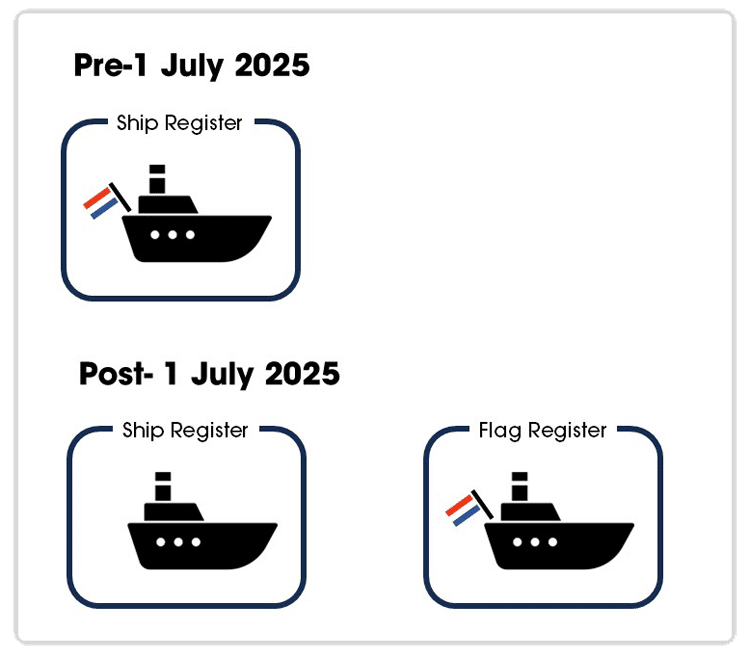
Under the previous system, registering a vessel’s ownership and its nationality were combined. From 1 July 2025, these processes will be separate:
- Property Registration will occur in the public registers (Kadaster).
- Nationality Flag Registration will take place in the new Netherlands’ Flag Register.
To fly the Dutch flag, a vessel must first be registered as property before applying for nationality in the new Flag Register. Once approved, the ship will receive a Certificate of Registry (zeebrief) confirming its Dutch nationality.
2. Replacement of the Nationality Certificate
Currently, a Nationality Certificate (nationaliteitsverklaring) is required to register a vessel as property. With the RNZ, this document will be eliminated. Instead, the ships register will directly verify that a ship meets the requirements to fly the Dutch flag, making the process faster and reducing administrative burdens.
3. Effective Enforcement through Flag Withdrawal
The RNZ empowers authorities to revoke a vessel’s Dutch flag status if it fails to comply with Dutch nationality requirements. This allows for stricter enforcement without affecting the property rights of owners. Importantly, a vessel’s property registration will remain unchanged even if its right to fly the Dutch flag is revoked. This separation allows the Government to act decisively while preserving property rights. If non-compliance issues are resolved, the vessel may regain its flag rights.
4. Legal Basis for Bareboat Charters
For the first time, the RNZ creates a legal framework for bareboat-out charters, providing owners with more operational flexibility. Owners can register a vessel as property in the Netherlands while temporarily flying a different flag during a bareboat charter agreement. Conditions attached to these charters protect the rights of crew members and ensure compliance with safety regulations.
Introducing the Netherlands’ Flag Register
A standout feature of the RNZ is the creation of the Netherlands’ Flag Register, a new and unique system designed to manage vessels flying the Dutch flag. This register introduces several key concepts that set it apart from the old system.
A. Categories of Registration
The Netherlands’ Flag Register is divided into three categories:
- Merchant Ships Owned
- Merchant Ships under Bareboat Charter
- Pleasure Craft Owned
Each category reflects the type of vessel and its operation. The flexibility of this structure accommodates a wide range of vessels, from commercial shipping fleets to privately owned yachts.
B. Transparency and Accessibility
The Flag Register will be publicly accessible online, allowing users to view basic information about registered vessels. However, due to strict GDPR regulations, ownership details will be kept confidential to protect individuals’ privacy.
C. Pre-Registration Requirements
Although the underlying requirements for vessel registration remain mostly unchanged, there is now an additional step before submitting an application to the Flag Register:
- Owners must supply a Call Sign prior to registration. For non-Dutch citizens, this requires having a valid VHF operating licence to obtain the Call Sign.
Why is this Change Important?
The introduction of the RNZ and the Netherlands’ Flag Register represents a significant leap forward in modernising the nation’s maritime operations. Here’s why this framework is so crucial:
- Streamlining Processes: By separating property registration and flagging, administrative processes become more efficient, reducing delays for vessel owners.
- Enhancing Compliance: Authorities are now better equipped to enforce requirements for Dutch-flagged vessels, improving the credibility of the Dutch shipping sector.
- Meeting Industry Needs: Provision for bareboat charters and increased flexibility caters to the evolving needs and preferences of modern maritime operators.
- Improved Transparency: A publicly accessible Flag Register fosters greater trust and accountability.
Key Takeaways
The upcoming implementation of the RNZ and the launch of the Netherlands’ Flag Register mark a new chapter for maritime governance in the Netherlands. By simplifying registration processes, strengthening enforcement measures, and offering more flexibility, the RNZ creates a modern framework that benefits both vessel owners and the shipping industry at large.
Benefits of the Netherlands’ Flag Register:
- Simplified Registration: Clear distinction between property and nationality registration.
- Publicly Accessible Data: Transparent yet privacy-compliant system for vessel information.
- Flexible Solutions for Owners: Legal provisions for bareboat charters improve operational options.
- Stronger Compliance Enforcement: Authorities can act decisively without infringing on property rights.
If you’re a vessel owner, it’s crucial to familiarise yourself with these new regulations and prepare for their implementation in 2025. Ensure your vessel complies with the updated requirements to make the most of the benefits offered by the Netherlands’ Flag Register.
For any questions or assistance regarding maritime registration or flagging, feel free to reach out – we are here to help you sail smoothly into the future of Dutch maritime regulation.


