The French Certificate of Registry: A Window into 1970s Boating
Unpacking the Story of a Vintage Pleasure Craft Document
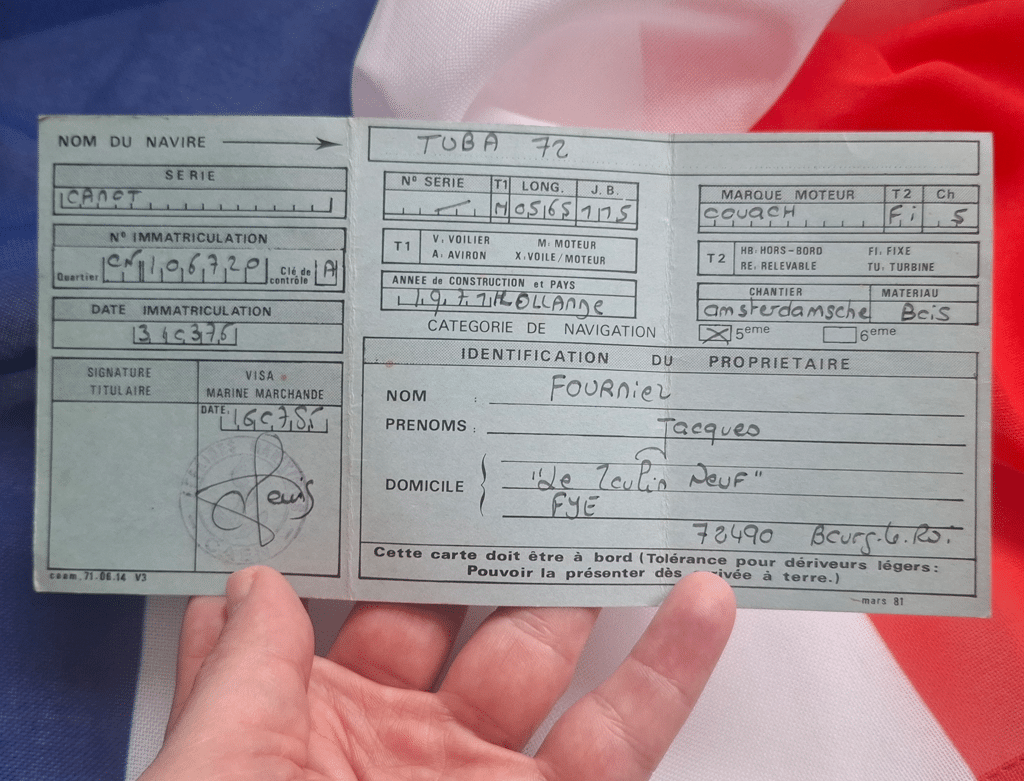
Sometimes, the most unassuming objects tell the most fascinating stories. A prime example is a French Certificate of Registry, or carte de circulation, from 31 March 1976. This single sheet of thick, blue paper, no larger than a pocket notebook, was a passport to the sea for a small motorboat named “TUBA 72”. It offers a detailed glimpse into the world of European leisure boating during the 1970s, a time when freedom and regulation went hand in hand.
This particular document, issued by the French ships register, is a beautifully preserved piece of maritime history. Its physical characteristics alone speak of its importance:
- Material: Thick blue paper.
- Dimensions: 10.5 cm when folded, 20.8 cm when unfolded.
- Condition: Very good, suggesting it was carefully kept by its owner.
Let us explore what this small card reveals about its vessel, its owner, and the administrative world it belonged to.
 What Was the “Carte de Circulation”?
 What Was the “Carte de Circulation”?
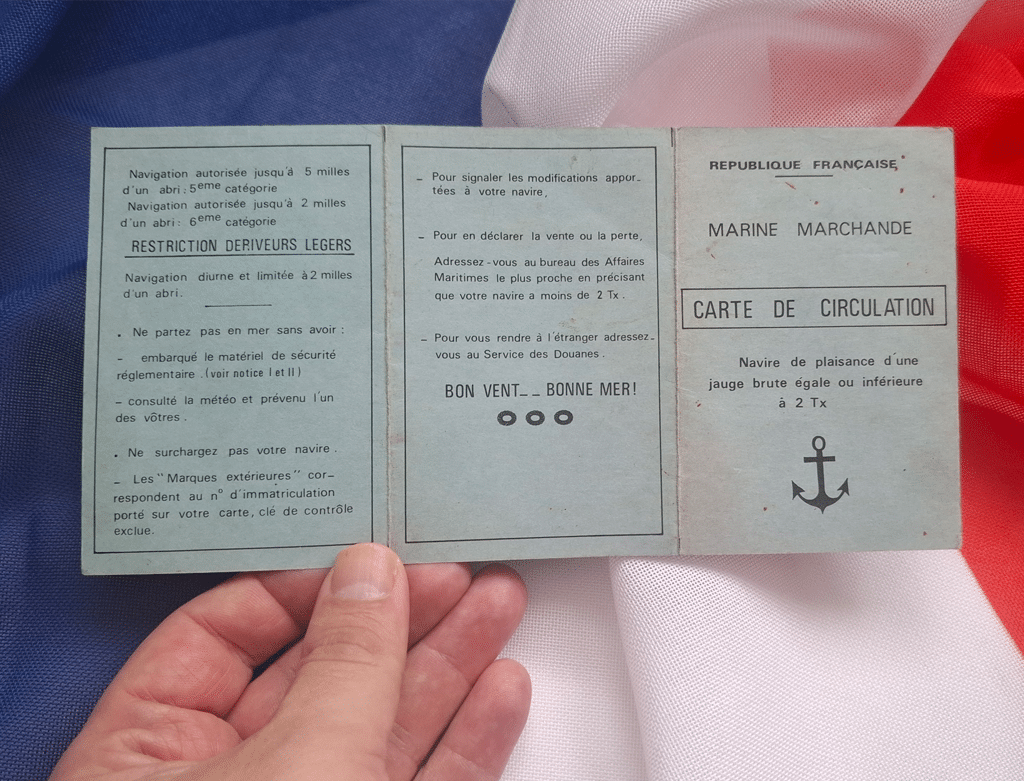
The pleasure craft Certificate of Registration was an essential document for owners of vessels. It served as the boat’s official identification, containing all critical details in one place. This card had to be on board at all times, though a tolerance was given for light dinghies, which could present it upon returning to land.
The card for “TUBA 72” identifies its owner as Jacques Fournier, a resident of Bourg‑Le‑Roi. It describes the vessel as a 5.65-metre wooden motorboat, equipped with a Couach engine. This type of administrative record was the bedrock of maritime governance, ensuring every vessel could be identified and was compliant with national rules.
Navigating with the Blue Card
A key function of the certificate, in this case, was to define where the vessel could safely travel. “TUBA 72” was assigned to the navigation categories 5th and 6th. This classification permitted the boat to navigate up to five miles from a safe harbour, ideal for coastal day trips.
However, this access to the water came with responsibilities clearly printed on the card itself. The operator was obliged to:
- Carry all mandatory safety equipment;
- Check the weather forecast before departing;
- Warn a contact on shore of their plans;
- Never overload the vessel.
These instructions highlight a safety-conscious approach, balancing the joy of boating with practical risk management. The card also detailed administrative duties, such as contacting the Maritime Affairs office to report the sale or loss of the vessel. For trips abroad, a visit to the Customs was necessary.
 The Mystery of the Dutch Shipyard
 The Mystery of the Dutch Shipyard
One of the most compelling parts of this certificate is the puzzle surrounding the boat’s origin. The document states it was built in Holland in 1971 at a shipyard named “Amsterdamsche”. This name strongly points to the Amsterdamsche Scheepswerf N.V., a well-known name used by the prestigious Dutch shipyard De Vries Lentsch.
The contradiction arises from the fact that De Vries Lentsch was officially liquidated in 1970, a full year before “TUBA 72” was supposedly constructed. How could a defunct shipyard build a new boat? Several plausible explanations exist. It is possible that the yard had unfinished hulls that were completed and sold after liquidation. Another theory is that the boat was built before 1970 but was only officially registered in 1971, perhaps after being sold to its first owner. This simple blue card leaves us with an intriguing historical question that adds to its charm.