Re-registering 10 EMSA Oil Recovery Vessels Under the Portuguese Flag
In 2023, Lorrendraaier managed the full re-registration of 10 EMSA oil recovery vessels, moving them from multiple different flag states into a single Portuguese register. The project involved deregistrations, physical surveys coordinated across multiple locations, and close collaboration with Bureau Veritas and Portuguese maritime authorities.
When EMSA decided to consolidate the registration of its oil recovery fleet under a single flag state, the task landed with Lorrendraaier. What followed was a carefully coordinated project spanning multiple countries, several stakeholders, and a considerable amount of logistical groundwork. Here is how it all came together.
Background: Why re-register in the first place?
The vessels in question were purpose-built oil recovery boats, originally registered by Lorrendraaier in 2023 across several different flag states. You can read more about that initial registration project here.
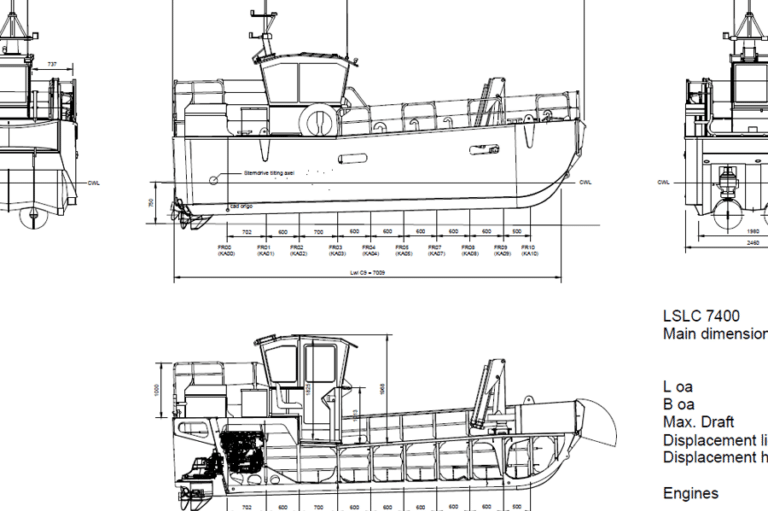
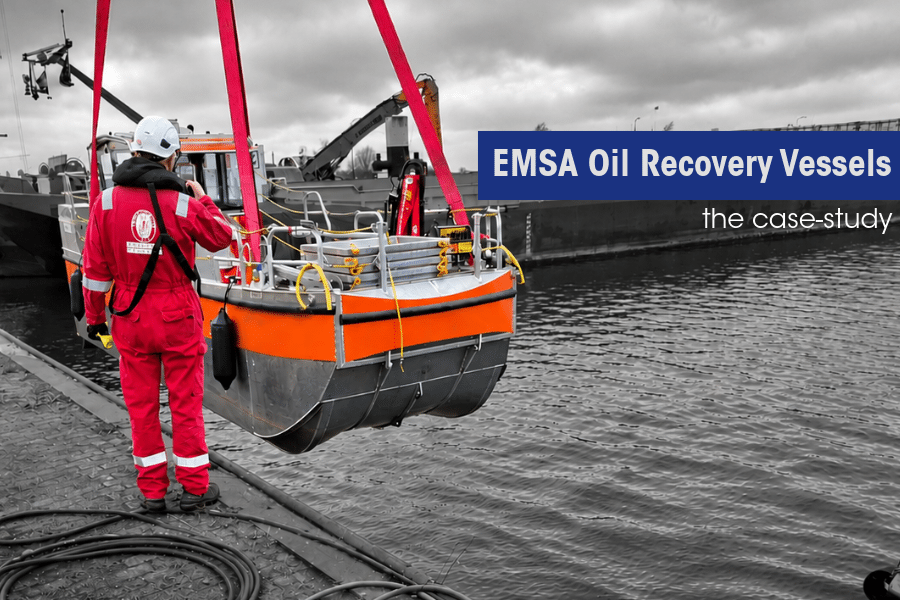
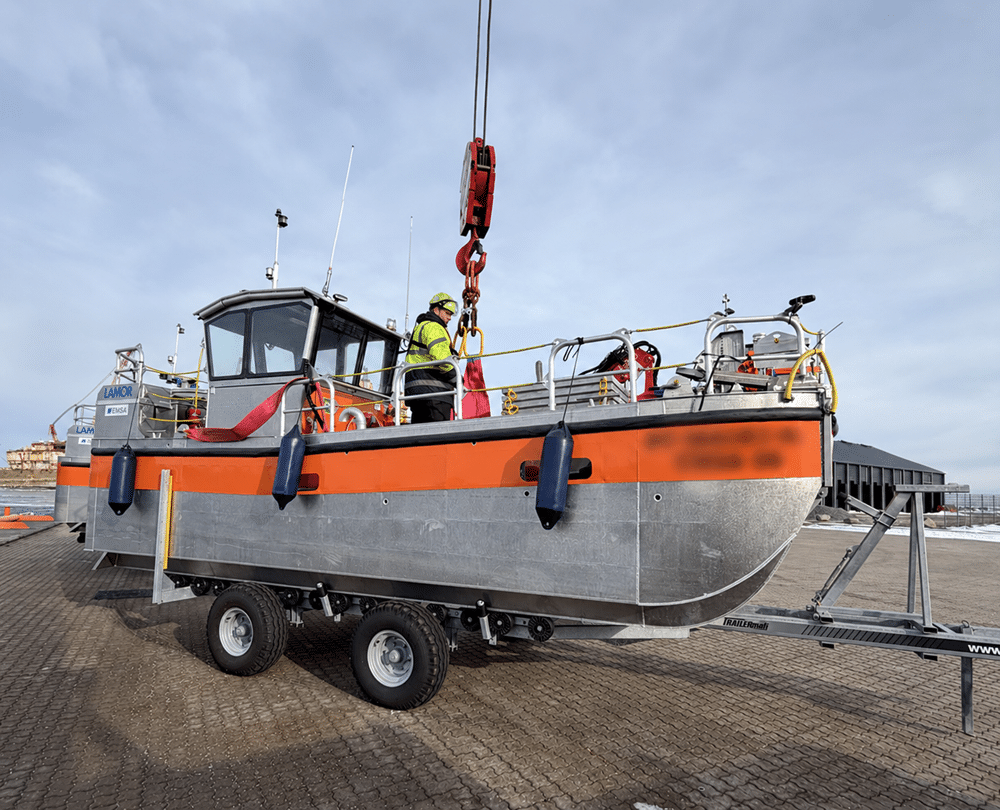
Each of these small, near-shore vessels – measuring just over 7 metres – was designed to respond quickly to maritime oil spills within the EU. Compact enough to be transported by trailer or aircraft, they can be deployed rapidly to wherever they are needed most.
Having the fleet spread across different registers made practical management more complicated than it needed to be. EMSA’s decision to consolidate everything under one flag was straightforward in principle: choose a single register, align the paperwork, and simplify operations going forward. Portugal was the logical choice. EMSA’s headquarters is in Lisbon, and the Portuguese ships register – overseen by the DGRM (Direcção Geral de Recursos Naturais, Segurança e Serviços Marítimos) – was a natural fit.
Who was involved?
A project of this scale requires the right people around the table. The key parties involved were:
- EMSA : European Maritime Safety Agency, the vessel owner
- Lamor : the Finnish shipyard that originally built the vessels
- DGRM : the Portuguese ships register
- Autoridade Marítima Nacional : Portugal’s national maritime authority
- Bureau Veritas : the classification society responsible for surveying the vessels
- Appointed local operators : the organisations responsible for the vessels at their respective locations
- Lorrendraaier : contracted to prepare, organise, and coordinate the full registration process
Lorrendraaier’s role was to manage everything from start to finish: from the initial deregistrations through to the moment each Certificate of Registry was issued.
What the work actually involved
Step one: Deregistering the vessels
Before any Portuguese registration could begin, each vessel had to be formally deleted from its existing ships register. That meant initiating deregistration procedures across multiple flag states, each with its own requirements, timelines, and administrative expectations. Getting this right from the outset was essential, as any loose ends here would delay the next steps.
Step two: Gathering and preparing documentation
Once the deregistrations were in motion, the documentation process began. This covered collecting and preparing all materials required by the Portuguese authorities and Bureau Veritas. Given the original registration project had already surfaced some complexity – electronically signed procurement agreements in place of traditional Bills of Sale, EMSA’s status as an EU agency rather than a private or commercial owner – this step required careful attention to detail and direct communication with the relevant authorities.
Step three: Preparing the vessels for survey
This is where the coordination became particularly demanding. The 10 vessels were located at different sites across Europe, each operated by a different local party. Before Bureau Veritas could conduct its surveys, each vessel needed to meet specific physical requirements, including the correct application of markings in line with Portuguese ships register standards.
Lorrendraaier coordinated directly with each local operator to make sure the vessels were properly prepared before the surveyor arrived. The goal was to minimise post-survey amendments, which add time and cost to a project. Getting this preparation right upfront required careful planning and clear communication with operators who were not always familiar with Portuguese registration requirements.
Step four: Coordinating the surveys
Bureau Veritas conducted the physical surveys of all 10 vessels. Because the vessels were spread across different locations, different surveyors were assigned to different vessels. Lorrendraaier managed the scheduling and logistics across all sites, ensuring that each survey was conducted in a consistent and timely manner.
Keeping 10 simultaneous survey processes running smoothly – with different surveyors, different operators, and different locations in the mix – required the kind of meticulous preparation that tends to go unnoticed when everything goes to plan.
Step five: Post-survey follow-up
After each survey, Bureau Veritas identified any outstanding items that needed to be addressed before certification could proceed. Lorrendraaier coordinated and reported on all post-survey amendments, liaising between the local operators, Bureau Veritas, and the Portuguese authorities until every vessel met the required standard.
The outcome
All 10 vessels were successfully re-registered under the Portuguese flag, with Certificates of Registry issued for each one. EMSA now has its oil recovery fleet consolidated under a single, practical register, exactly the outcome the project was designed to achieve.
What this kind of project requires
Re-registering a fleet is rarely as simple as it sounds. Moving 10 working vessels from multiple flag states into a single register involves a chain of steps that each depend on the one before it. Delays in deregistration hold up documentation. Documentation issues delay surveys. Poorly prepared vessels extend the post-survey process.
What keeps a project like this on track is preparation, clear lines of communication, and a single point of coordination that takes ownership of the whole process. That is what Lorrendraaier was contracted to provide, and what we delivered.